A complex port energy challenge
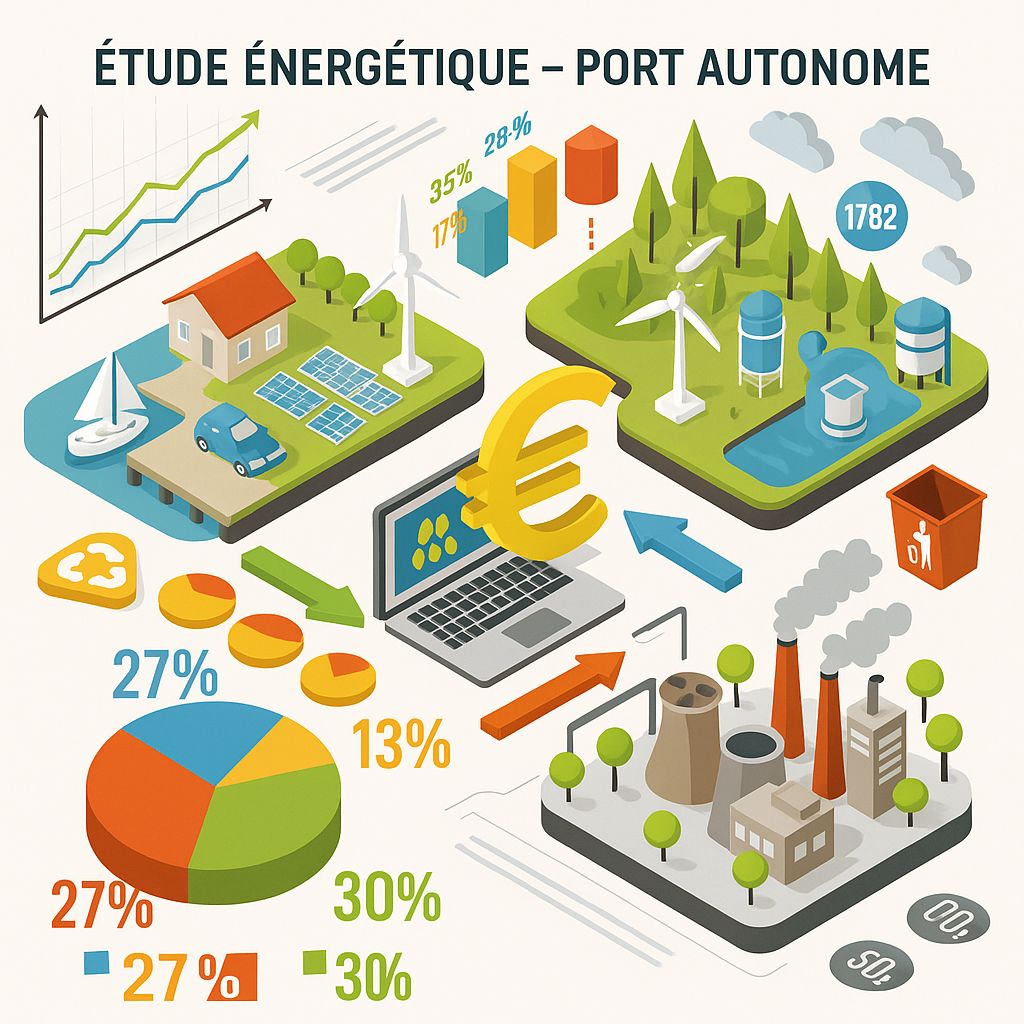
Autonomous ports face increasing energy needs: electrification of ships at berth, port facilities, logistics… Our mission? To design a renewable energy solution enabling a 30% energy coverage rate with an 80% self-consumption rate.
In-depth analysis: understand before you act
Our energy audit began with a detailed analysis of 12 months of consumption data. On-site readings revealed significant variations depending on the season and the type of ships accommodated:
- Seasonal profiles: summer peaks linked to tourism, constant needs for logistics
- Ship power consumption at berth: identifying electricity supply needs
- Infrastructure and administrative buildings
This analysis phase was crucial to properly size the installations and ensure optimal self-consumption.
Optimal energy mix: wind + solar + batteries
We studied several scenarios before identifying a sustainable solution: a mix of wind and solar power and/or potential energy storage.
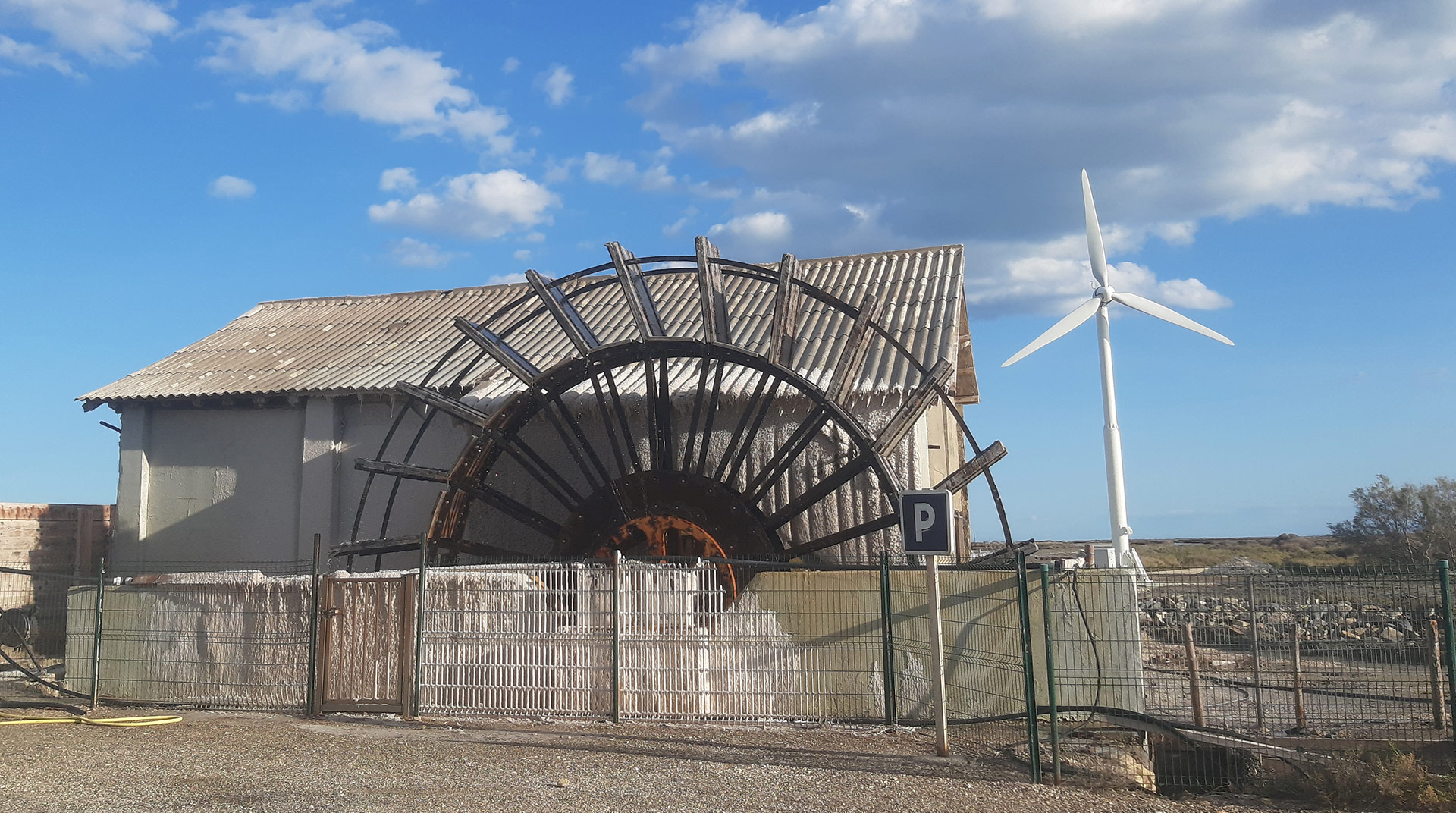
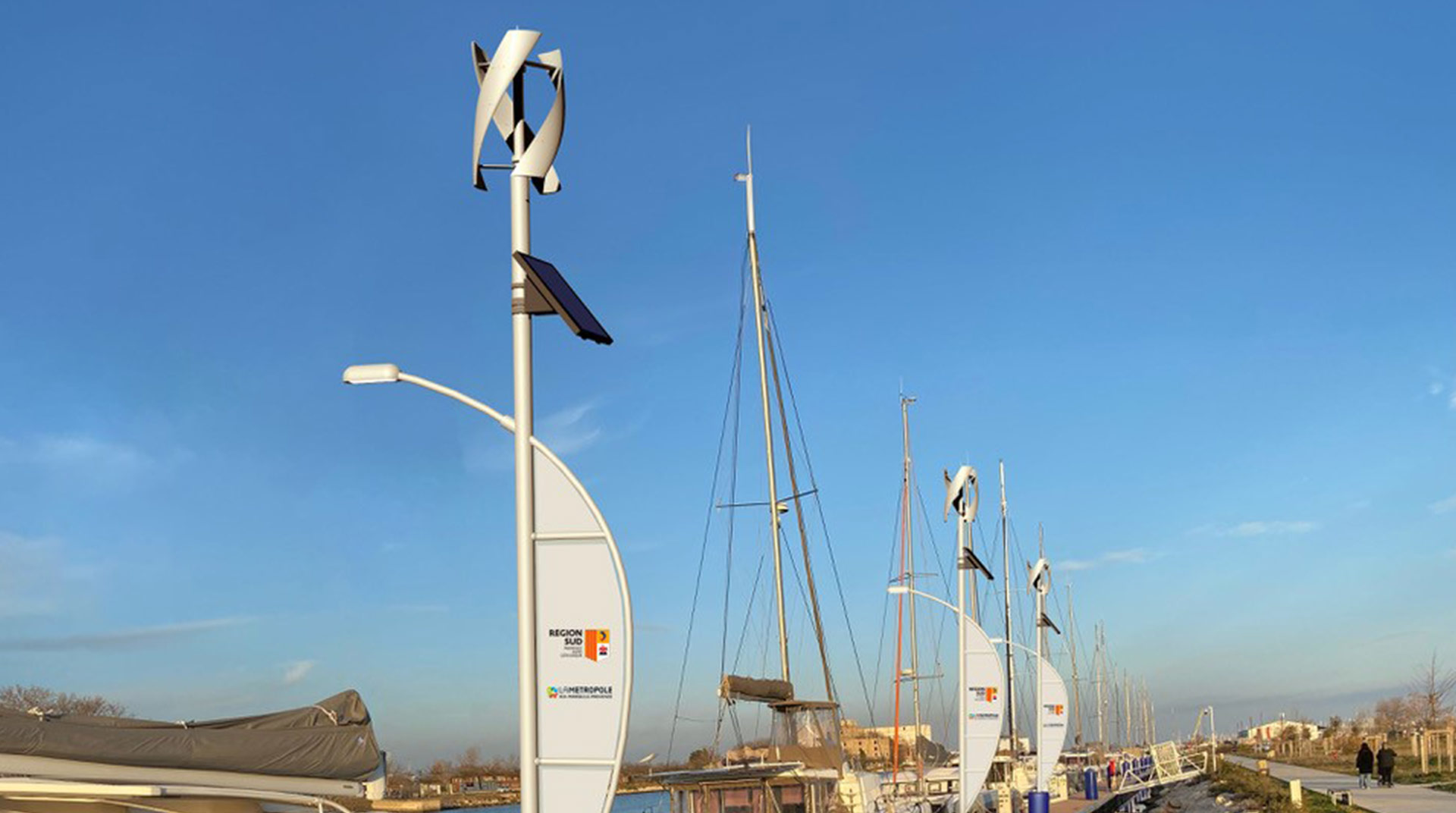
Why does this mix work? Small-scale professional wind turbines: harnessing consistent offshore winds, and photovoltaic panels: providing seasonal complementarity with wind power.
Result: 50% coverage in green energy production with 90% self-consumption, exceeding initial targets!
Landscape integration
3D simulations made it possible to visualize the impact of the installations from different viewpoints. The small-scale wind turbines blend naturally into the industrial port landscape while reinforcing the infrastructure’s environmental commitment.
Public acceptability
A public consultation process was successfully carried out: presentation to local residents, participatory workshops, transparent communication on environmental benefits.
Security and compliance
All port safety standards have been met: equipment certifications, fire protection, environmental impact studies, administrative authorizations.
Recyclability: consider the entire life cycle
The selected equipment demonstrates excellent environmental performance:
- Wind turbines: 90% of components are recyclable (steel, copper, aluminum)
- Solar panels: 95% of materials are recycled
Tangible benefits
Economical
- 30% reduction in annual energy bill
- Protection against price volatility
Environmental
- Reduction of 450 tonnes of CO2 per year
- Contribution to the territorial energy transition
- A model for other maritime infrastructures
Expertise applicable to all sectors
This methodology is perfectly suited to other fields:
- Agriculture: agricultural wind power for farms, cooperatives, irrigation
- SMEs and industries: reducing energy costs, CSR compliance
- Public authorities: energy self-sufficiency of public buildings
Your renewable energy project
Autonomous port, local authority, SME, industry or agricultural player? Our expertise in small professional wind power and renewable energies supports you from energy audit to commissioning , for a successful and profitable energy transition.
Contact us to discuss your project and discover how to optimize your energy self-consumption.